Why plantar warts grow inwards and how they are treated
How to tell a wart from a corn, how it spreads, and honest numbers on cryotherapy and salicylic acid.

AuthorDr. Aygun MustafayevaAesthetic dermatologist, dermatovenereologist and trichologist
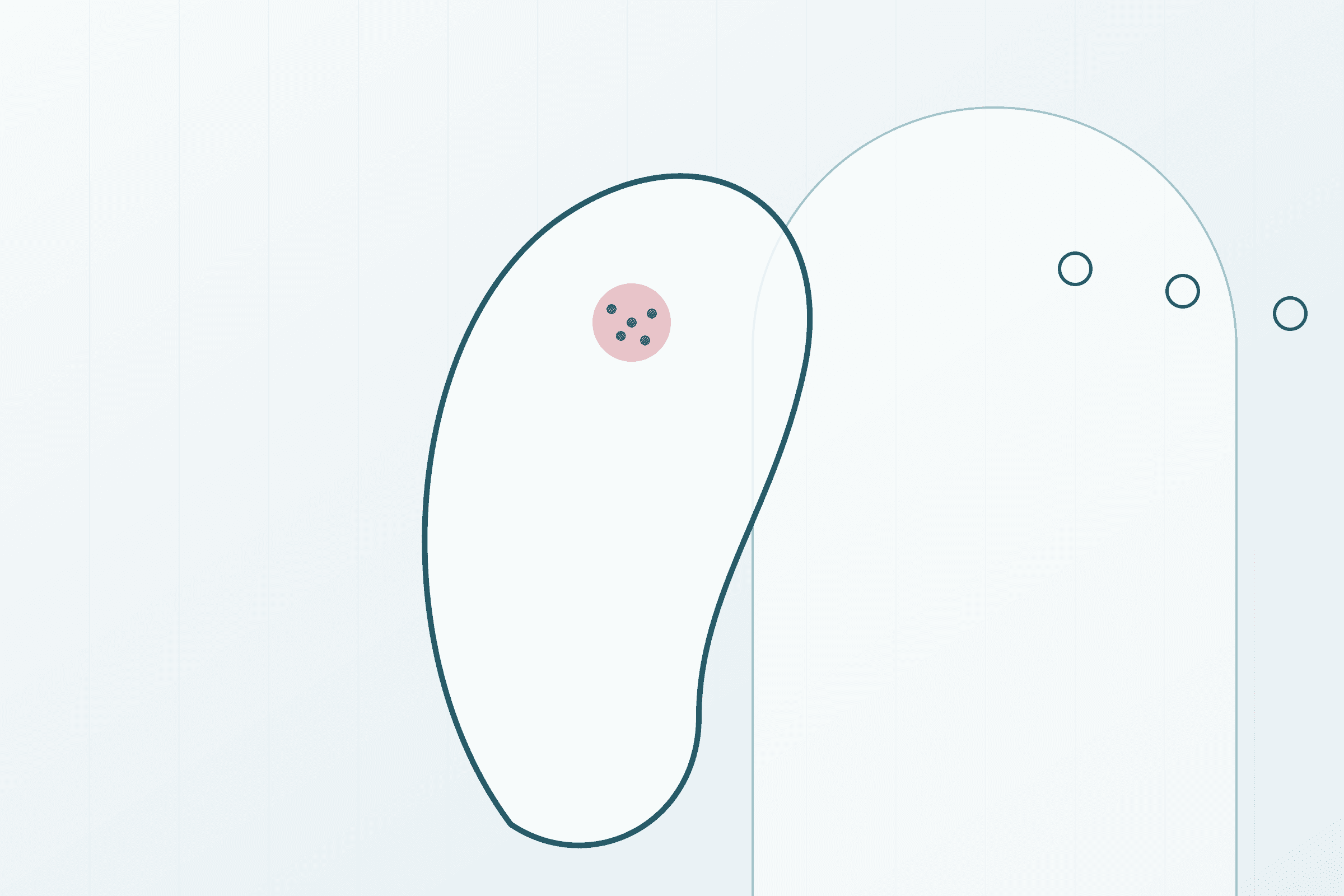
A plantar wart is a growth caused by the human papillomavirus (HPV) on the underside of the foot. Because body weight constantly presses on it, it grows inwards rather than outwards. That is why a small-looking wart can hurt like stepping on a stone.
Wart or corn
- A wart interrupts the skin lines, while in a corn the lines continue
- A wart has tiny black dots in the middle: these are clotted capillaries
- A wart hurts more when squeezed from the sides, a corn when pressed from above
- A corn comes from friction and pressure; it is not a virus and is not contagious
How it spreads
The virus thrives in damp places: pools, gym showers, saunas, shared slippers. Tiny invisible cracks in the skin and skin softened by moisture make infection easier. Sharing towels and shoes at home also plays a part.
Treatment: honest numbers
Some warts clear on their own over time, especially in children. The best-studied treatments are salicylic acid and liquid nitrogen cryotherapy. In a large randomised trial of plantar warts, no difference was found between these two methods, and both needed several months of patience. For warts on the hands, cryotherapy has shown better results.
So we choose the method together, based on the wart’s location, size and number, your pain tolerance and your time. Cryotherapy is usually done in several sessions 2-3 weeks apart, and a blister may form after each session.
What not to do
- Cutting, picking or piercing the wart with a needle: the virus spreads
- "Burning" it at home with strong acids: healthy skin burns and a wound remains
- Using any product without a doctor if you have diabetes or poor circulation in the feet
- Walking barefoot in pools and showers with a wart
Scientific sources
The information in this article is based on the peer-reviewed papers, systematic reviews and clinical guidance below.
- Kwok, C. S., Gibbs, S., Bennett, C., et al. (2012). Topical treatments for cutaneous warts. Cochrane Database of Systematic Reviews, 2012(9), CD001781. [PMID: 22972052] | [DOI: 10.1002/14651858.CD001781.pub3]
- Cockayne, S., Hewitt, C., Hicks, K., et al. (2011). Cryotherapy versus salicylic acid for the treatment of plantar warts (verrucae): a randomised controlled trial. BMJ, 342, d3271. [PMID: 21652750] | [DOI: 10.1136/bmj.d3271]
- Bruggink, S. C., Gussekloo, J., Berger, M. Y., et al. (2010). Cryotherapy with liquid nitrogen versus topical salicylic acid application for cutaneous warts in primary care: randomized controlled trial. CMAJ, 182(15), 1624-1630. [PMID: 20837684] | [DOI: 10.1503/cmaj.092194]
- Sterling, J. C., Gibbs, S., Haque Hussain, S. S., et al. (2014). British Association of Dermatologists' guidelines for the management of cutaneous warts 2014. British Journal of Dermatology, 171(4), 696-712. [PMID: 25273231] | [DOI: 10.1111/bjd.13310]